
When choosing a bar of soap, have you ever looked at the ingredient list and wondered what makes one soap different from another?
Natural handmade soap has become a popular choice for people who appreciate simple ingredients, traditional craftsmanship and knowing more about the products they use every day.
But is natural soap actually better for your skin?
The answer depends on the ingredients, the formulation and your individual skin needs. Not every natural soap is suitable for everyone, and not every commercially manufactured cleanser is harsh.
At ashbury BLOOM•, we believe what makes a handmade soap special is the combination of thoughtfully selected ingredients, traditional soap-making techniques and the care that goes into every bar.
Here’s a closer look at how natural soap is made, what makes it different and what to consider when choosing one.
What Is Natural Soap?
Natural soap is generally made by combining oils or fats with an alkaline ingredient through a process called saponification.
During this chemical reaction, the oils and alkali are transformed into soap and glycerin.
Traditional handmade soaps often use plant-based oils such as olive, coconut and sunflower oil, along with ingredients like clays, herbs and essential oils.
However, the term natural doesn’t automatically mean a product is safer, gentler or better for every skin type. The complete formulation matters more than the label alone.
At ashbury BLOOM•, we focus on using carefully selected ingredients and creating soaps that cleanse effectively while offering an enjoyable bathing experience.
1. Natural Soap Can Be Made With Simple, Familiar Ingredients
One of the reasons we love making handmade soap is that many of the ingredients are familiar.
Our soap formulations use plant-based oils, including olive oil, coconut oil and sunflower oil. Depending on the recipe, we also use castor oil, palm oil and other carefully selected ingredients.
Each oil contributes different characteristics to the finished bar.
For example:
- Olive oil contributes fatty acids associated with a conditioning soap formulation.
- Coconut oil helps produce a firm bar with effective cleansing properties and a bubbly lather.
- Sunflower oil contributes to the overall fatty acid balance of the recipe.
- Castor oil helps support a rich, stable lather.
The proportions of these ingredients matter. Soap-making isn’t simply about combining as many natural oils as possible. It’s about creating a balanced formulation that cleanses well and feels pleasant to use.
We also enjoy incorporating ingredients commonly found in kitchens, such as coffee, cocoa, honey and other botanicals, into selected recipes.
These ingredients can contribute natural colour, texture and character without relying on synthetic dyes.
2. Handmade Soap Naturally Contains Glycerin
One interesting feature of traditional soap-making is the formation of glycerin.
Glycerin is produced during saponification, when oils react with sodium hydroxide to form soap.
It’s also a humectant, meaning it can attract water.
In traditional cold-process soap, the glycerin produced during soap-making generally remains in the finished bar.
This is one reason glycerin is often discussed when comparing traditional handmade soap with other cleansing products.
However, it’s worth remembering that many commercial cleansers also contain glycerin or other moisturizing ingredients.
The overall formulation, rather than the presence of one ingredient alone, determines how a cleanser performs.
3. Why We Choose Essential Oils for Our Handmade Soaps
Scent is an important part of the handmade soap experience.
At ashbury BLOOM•, we use essential oils to scent our soaps rather than synthetic fragrance oils.
Essential oils are aromatic compounds obtained from plants, and they allow us to create scents inspired by botanicals, herbs and citrus fruits.
They are often more expensive than conventional fragrance oils, but using them is an intentional part of our approach to soap-making.
From refreshing citrus to calming floral aromas, we want the scent of each bar to complement the experience of using it.
Our Honey Oats Soap is an exception within our collection: it is made without added essential oils and is unscented.
It’s also important to understand that natural essential oils can still cause irritation or allergic reactions in some people. Natural origin alone doesn’t guarantee that an ingredient will suit every skin type.
For customers who prefer products without added scent, an unscented option may be worth considering.
4. What Makes Cold-Process Soap Different?
At ashbury BLOOM•, we make our soaps using the traditional cold-process method.
This technique allows us to carefully formulate our recipes and create individual bars with distinctive colours, swirls and botanical details.
Unlike methods that deliberately cook the soap mixture for an extended period, cold-process soap-making relies primarily on the heat generated during the soap-making reaction.
Once the ingredients are combined and poured into moulds, the soap begins to set.
After unmoulding and cutting, our bars are left to cure for approximately four to six weeks.
Why Does Handmade Soap Need to Cure?
Curing is an important part of our soap-making process.
During this time, excess water gradually evaporates and the bars become harder.
A properly cured bar generally holds up better during regular use and is less likely to become soft or dissolve quickly when kept between washes.
This is one of the reasons we don’t rush our production process.
From preparing the ingredients to cutting, decorating and curing each batch, creating handmade soap requires time and attention.
For us, that’s part of what makes the finished product special.
5. Is Lye Used in Natural Soap?
One of the most common questions we receive about handmade soap concerns lye.
Some customers are surprised to learn that traditional soap-making requires sodium hydroxide, commonly called lye.
Because sodium hydroxide is caustic in its original form, it’s understandable that people might question why it’s used in a product intended for the skin.
The important distinction is what happens during soap-making.
Understanding Saponification
When sodium hydroxide is combined with the correct amount of oils, a chemical reaction called saponification takes place.
During this reaction, the sodium hydroxide is consumed as the oils are converted into soap and glycerin.
In a properly formulated and fully saponified bar, there should be no excess active lye remaining.
Lye doesn’t simply evaporate from the soap. It reacts chemically with the oils to create an entirely different finished product.
Understanding this process helps explain why lye is an essential part of traditional soap-making rather than an ingredient to fear in a properly made finished bar.
6. Natural Ingredients Can Create Beautiful Soap Colours
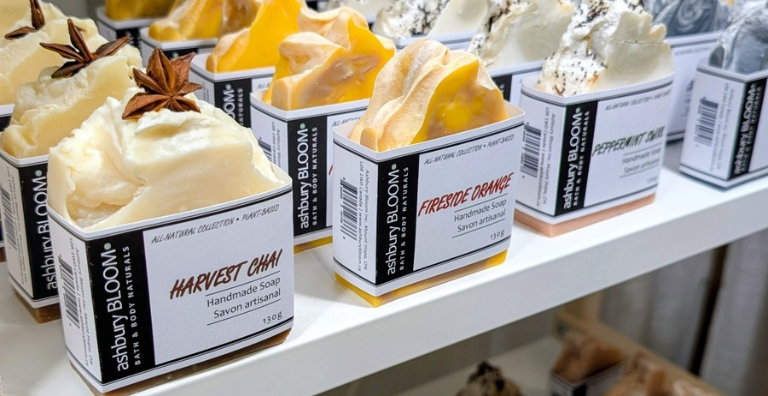
Handmade soap doesn’t need synthetic dyes to be visually interesting.
At ashbury BLOOM•, we use naturally derived colourants and selected ingredients to create the appearance of our soaps.
Depending on the formulation, these may include:
- Clays for soft, earthy colours
- Coffee for warm brown tones
- Cocoa for rich, deeper shades
- Charcoal for dark colouring
- Honey and other natural ingredients for additional colour variation
These ingredients allow us to create soaps that are visually distinctive while remaining true to our ingredient philosophy.
Some bars feature simple, understated colours, while others involve detailed swirling, shaping or botanical decoration.
A considerable amount of work goes into developing a soap that looks beautiful while maintaining the desired texture, lather and scent.
For us, handmade soap is both a practical everyday product and a creative craft. Our Pink Clay Handmade Soap is a beautiful example of how natural clays can contribute soft, delicate colour to a handmade soap bar.
7. What About Natural Soap for Sensitive Skin?
Not everyone’s skin responds to cleansing products in the same way.
Some people prefer simple formulations with fewer added ingredients, while others need products specifically developed to minimize irritation.
Our Sensitive Handmade Soap was created with this in mind.
Our Calendula-Infused Olive Oil
One of the distinctive ingredients in our Sensitive Soap is calendula-infused olive oil.
Before making the soap, we infuse calendula into olive oil for approximately six weeks.
This allows oil-soluble compounds from the botanicals to move into the oil, creating an infused ingredient that becomes part of our soap formulation.
We also include avocado oil and use a smaller amount of lavender essential oil than in our regular Lavender Soap.
We developed this recipe as a thoughtful option for customers who prefer a simpler approach to their bath and body products.
8. Does Handmade Soap Last Longer?
Customers sometimes ask whether handmade soap lasts as long as commercially manufactured bars.
The answer depends on several factors, including the recipe, curing time, storage conditions and how frequently the soap is used.
At ashbury BLOOM•, we allow our cold-process soaps to cure for four to six weeks before they’re ready for sale.
This helps produce a firmer bar that holds up well during everyday use.
Proper storage also makes a difference.
To help a handmade soap last longer:
- Keep it on a soap dish that allows water to drain.
- Avoid leaving the bar sitting in a puddle of water.
- Allow it to dry between uses.
- Store unused bars in a cool, dry place.
These simple habits can help extend the life of your soap.
9. A Thoughtful Approach to Packaging
Choosing natural handmade soap can also be an opportunity to consider how products are packaged.
At ashbury BLOOM•, we avoid individually wrapping our handmade soap bars in plastic.
Instead, we use a simple paper band around each bar, allowing customers to see the soap itself.
We also use paper-based materials when packing our products for shipping.
These choices help us reduce unnecessary plastic packaging while maintaining a presentation that reflects our brand.
We also grow a small selection of herbs that may be incorporated into our work.
While no manufacturing process is completely without environmental impact, we believe small, practical choices are worth making.
10. Supporting Canadian Handmade Businesses
When you purchase handmade soap from a Canadian maker, you’re supporting more than a single product.
You’re supporting the work involved in developing formulations, sourcing ingredients, producing small batches and preparing finished products for customers.
At ashbury BLOOM•, our soaps are handcrafted in Mount Hope, Ontario.
Every batch involves planning, preparation, cutting, curing and packaging before the finished bars are ready to leave our workshop.
We also work with independent retailers across Canada who share our appreciation for thoughtful, Canadian-made bath and body products.
For customers, buying handmade soap is an opportunity to choose something created with care and intention.
So, Is Natural Soap Actually Better?
Natural soap isn’t automatically better for everyone.
A product’s ingredients, formulation and suitability for your skin are more important than whether it’s described as natural or conventional.
But for people who value simple plant-based ingredients, traditional soap-making methods, botanical scents and handmade craftsmanship, natural soap offers something distinctive.
At ashbury BLOOM•, we take pride in creating soaps that combine effective cleansing with carefully selected ingredients, beautiful presentation and the personal attention that goes into every batch.
From our six-week calendula infusion to the four-to-six-week curing process, these details reflect the care we put into our products.
If you’re interested in experiencing traditionally handcrafted soap, explore our collection of handmade soap bars, made with care in Ontario, Canada.
Discover our handmade soap collection and find a bar that suits your preferences.
Frequently Asked Questions About Natural Soap
Is natural soap better for your skin?
Natural soap may appeal to people who prefer plant-based ingredients and traditional formulations, but its suitability depends on the complete recipe and individual skin needs.
Does natural soap contain lye?
Lye is used to make traditional soap. During saponification, it reacts with oils to form soap and glycerin. Properly formulated and fully saponified soap should not contain excess active lye.
Why does handmade soap need to cure?
Curing allows excess water to evaporate and helps the bar become harder and longer-lasting. At ashbury BLOOM•, our cold-process soaps cure for approximately four to six weeks.
Is natural soap suitable for sensitive skin?
It depends on the formulation and the individual. Essential oils and other natural ingredients may cause irritation, while traditional alkaline soap may be unsuitable for some sensitive skin conditions.
Does handmade soap contain glycerin?
Yes. Glycerin is naturally produced during saponification and generally remains in traditional cold-process soap.
How should I store handmade soap?
Use a draining soap dish and allow the bar to dry between washes. Keeping it away from standing water helps prevent it from softening prematurely.